

By TJJD Communications —
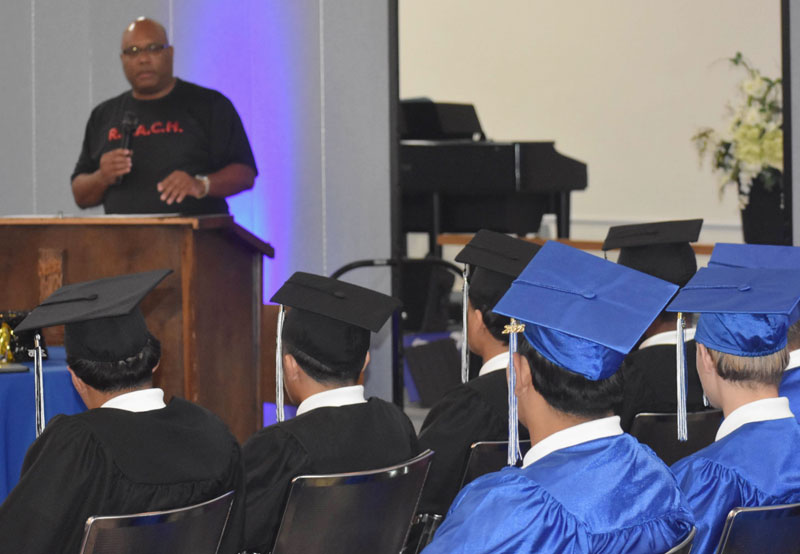
At the end of February, Giddings State Juvenile Correctional Facility celebrated a significant milestone as 14 youth walked across the stage to receive GEDs and high school diplomas. Mentors, family members, campus staff, and guests from across the agency filled the room to celebrate and recognize the work it took to reach these powerful accomplishments.
Graduation day was filled with memorable moments, including student leaders presenting the colors, a youth speaker reflecting on the journey ahead, and an inspiring keynote from Albert Yancey III, founder of Faith Beyond Incarceration. His message of transformation — rising from incarceration at 17 to becoming a national voice for hope — reinforced that growth and success are possible with opportunity and the proper support.
The Education Gap in the Juvenile Justice System
Many youth who enter the Texas Juvenile Justice Department (TJJD) arrive an average of seven grade levels behind academically. It is common for students to be several grade levels below their peers due to disrupted schooling, unstable home environments, and untreated learning challenges. Research consistently shows that educational failure and school disengagement are strong risk factors for justice involvement.
That’s why education is central to TJJD’s rehabilitation model, and why these types of accomplishments are so important to celebrate. At TJJD, youth attend school year-round in structured classrooms led by certified teachers. Instruction includes credit recovery, special education services, literacy development, vocational training and high school equivalency preparation with the goal of ensuring every youth leaves with meaningful academic progress and a chance to reshape their own path.
Commitment in the Classroom and Across Campus
Each diploma and GED earned at Giddings reflects sustained effort and self-discipline. Even through setbacks and overcoming challenges, these students remained committed to completing daily instruction, coursework, and testing prep, to accomplish their goals.
That commitment is matched by staff across the campus. Teachers, reentry specialists, administrators, and support teams were there for every step, working together to guide students through academic planning, vocational pathways, and postsecondary applications.
Graduation is the result of coordinated effort across departments and a shared expectation that youth can meet high standards when provided structure and support.
Next Steps for Graduates
In addition to earning diplomas and GEDs, many graduates completed vocational certifications in trades like welding, carpentry, automotive technology, and more while at TJJD. These certifications allow students to gain practical training, hands-on experience, and industry-recognized skills aligned with workforce demands that will ultimately increase employability upon release.
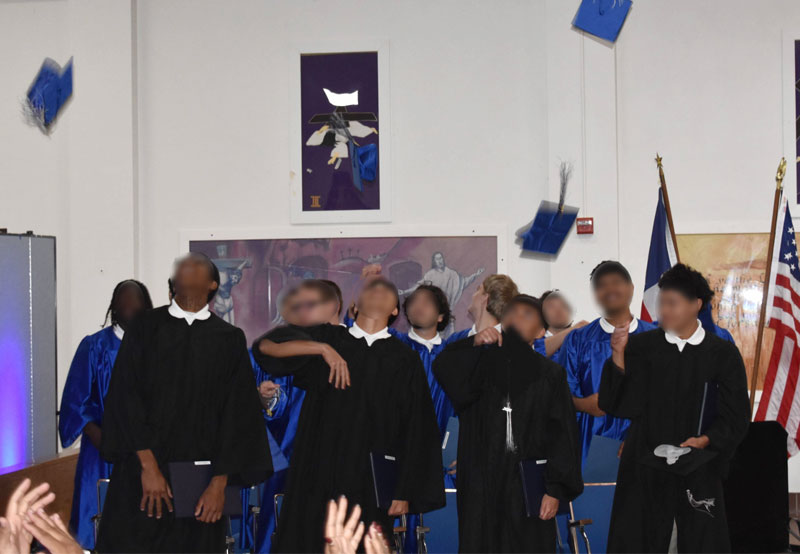
Continuing education is also a priority for TJJD. Through college visits and individualized career planning, students explored postsecondary opportunities at University of the Incarnate Word, Texas State University, Blinn College, Prairie View A&M University, and Texas State Technical College. Many TJJD graduates have applied, been accepted, and are now preparing to continue their education, made possible by the Parrie Haynes and John C. Wende Trust Fund Scholarship. One student even earned two full-ride scholarships, including one to Texas State University!
These outcomes reflect the intentional preparation required to help youth stay on track and avoid further involvement in the justice system after they exit. With these opportunities in place, graduates are positioned to take next steps that align with the goals they have set for themselves and their futures.
Building Futures Through Education
Graduation at Giddings represents measurable progress. Fourteen young people completed an important milestone that strengthens their employment prospects, increases earning potential, and reduces the likelihood of recidivism.
Education remains one of the strongest predictors of long-term stability and by combining academic instruction, vocational training, and structured reentry planning, TJJD works to ensure youth leave better prepared than when they arrived.
As these graduates move forward, their accomplishments reflect both individual effort and a coordinated commitment to rehabilitation through education. Congratulations to the Giddings State Juvenile Correctional Facility graduates as they take the next step toward productive, responsible futures.