

By David N. Krough, TJJD Communications —
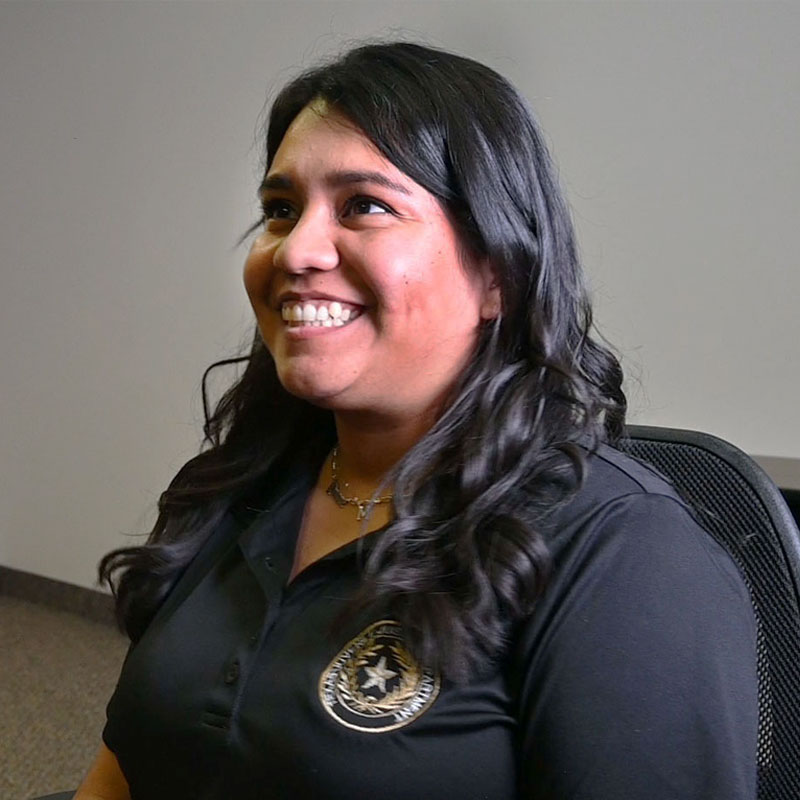
In the last year, TJJD Parole Officer Yvonne Garcia has managed an admirable feat: She did not have to revoke parole for any of the youths on her caseload in the Fort Worth district.
“They know that I am open to listening to whatever their problem is,” Garcia said. “I try to be as supportive as I can and let them know that they can communicate with me on any issues they have before it leads to something more serious. My boss (Parole Supervisor Tony Roberts) has said he does think that it’s because I’m a very positive person for these kids.”
Garcia’s mother was a caseworker for youth and she grew up wanting to follow a similar path. After first working in security with the Office of the Inspector General, she landed her job in parole more than three years ago.
She credits effective communication with youth and the ability to effectively listen as part of her success.
“When I’m working with my youths, I do try to be as empathetic as I can with them and I do encourage them to do their best,” she said. “I’m big on communication with them, so if there’s ever a situation, I want to make sure that they’re comfortable and feel safe enough to tell me about the situation . . . before it gets worse.”
She says above all, she does not want to be another negative person in kids’ lives, since so many have experienced that.
“I genuinely do care about the kids and I do want them to do better.”
Co-worker Volunteer Service Coordinator Kevelle Wasson described Garcia as “easy to work with, dedicated to her job, always helpful, kind and thoughtful of others … a team player, very organized and has a bubbly and joyful personality.”
At the same time, Garcia says some parents have viewed her cheerful demeanor and interaction with skepticism.
“I’ve had a few parents just straight up tell me ‘You’re smiling too much, my kid’s not going to take you seriously,’” she said.
But she maintains that she doesn’t have to “be mean” to exercise authority. She will extend a youth’s parole, if that’s necessary. “I’m still going to do whatever I have to do on my part, but just because I’m smiling, that doesn’t mean anything. I’m still going to do whatever I have to do to help your child.”
Garcia told the story of one youth in a rural part of her district living in a trailer on a large property, with only his 18-year-old brother, as his parents were both incarcerated. The boy was about 14 and had to register as a sex offender, so finding employment was difficult, as was his ability to keep in contact with his school, since their Internet service was intermittent.
“That was such a hard … type of situation where your parents aren’t there for you,” she said. “That was just such a difficult situation and there’s a few times where I even cried to my mom. I don’t know how to help this kid. It’s just everything is rough and then the whole county knows his family because his dad was in and out of jail.”
Garcia said they obtained a broadband connection and a computer from a school so the boy was able to do school at home. Slowly, and week by week, the boy made good in his classes. He notified Garcia of his progress along the way, completing his community service and treatment programs.
“Keep doing what you’ve got to do, and we’ll just figure it out,” she said.
The boy’s case seemed like one challenge after another, Garcia said, and at one point after finishing his parole, he was unsure how to contact the sheriff to register his status. She had to teach him how to leave a voicemail over the phone or go in person.
“That was a rough situation, but it worked out at the end, so I’m glad. I hope, hopefully it stays that way,” she said. “So long as you’re honest with the kids, you are trying to help the kids and work with them, not against them, it can be really a really fun and meaningful job, and it can be motivational on both ends.”